

Retirement often creates an opportunity to reconsider not only where you live, but how you want your everyday life to feel.
For some people, that means moving closer to family. For others, it means finding a smaller community, spending more time outdoors or leaving behind the traffic and pace of a larger city. Penticton regularly attracts retirees from other parts of British Columbia, Alberta and across Canada for many of these reasons.
Located between Okanagan Lake and Skaha Lake, Penticton offers warm summers, relatively mild winters, beaches, recreation, wineries and many of the services people want nearby. It is large enough to provide everyday conveniences without feeling like a major urban centre.
However, choosing a retirement destination requires more than visiting during a beautiful week in July. Housing costs, healthcare, transportation, property maintenance and proximity to family all deserve careful consideration.
So, is Penticton a good place to retire? For many people, it can be. The more important question is whether Penticton offers the right combination of lifestyle, housing and services for the retirement you have in mind.
Why Do People Retire in Penticton?
Penticton has long appealed to retirees, but retirement relocation remains an active part of the community’s growth.
According to information released by the City of Penticton, 31 per cent of newcomers who arrived in the city in 2024 identified themselves as retired. Among newcomers from Alberta, that number was 45 per cent. Alberta respondents frequently identified the climate and access to outdoor recreation as reasons for relocating.
That helps illustrate one of Penticton’s defining qualities. It is not simply a resort community or a place people visit during the summer. It is an established year-round city where retirement is already a significant part of the local community.
Penticton was also ranked fifth among Canadian cities for retirement in The Globe and Mail’s 2024 livability rankings, as reported by the City of Penticton.
Rankings can be useful, but they do not tell you whether a particular community will suit you. That decision comes down to the details of how you expect to live.
An Outdoor Lifestyle That Can Be Enjoyed at Your Own Pace

One of Penticton’s biggest attractions is the ability to spend time outside without needing to travel far.
Residents have access to two lakes, public beaches, golf courses, parks, walking paths and nearby trails. The Kettle Valley Rail Trail is a popular option for walking and cycling, while the surrounding South Okanagan provides opportunities for hiking, boating, paddling and exploring local wineries.
Outdoor living does not have to mean taking on demanding hikes or strenuous activities. It can be as simple as walking along the waterfront, meeting friends at a park, visiting a farmers’ market or enjoying coffee on a patio.
Penticton also has a community centre with swimming, fitness classes and recreational programming. These types of facilities can make it easier to remain active and connected throughout the year, especially after the busiest summer season has ended.
The climate is another important part of the appeal. Penticton generally experiences hot, dry summers and shorter winters than many Canadian communities. However, prospective residents should still consider the realities of summer heat, smoke during some wildfire seasons and occasional winter driving conditions.
Choosing the Right Penticton Neighbourhood for Retirement

The right property is only one part of a successful retirement move. Its location can have an equally significant effect on daily life.
Some Penticton neighbourhoods place residents close to shopping, restaurants, beaches and services. Others offer larger lots, quieter streets, elevated views or newer homes but may require more driving.
A home with an impressive lake view may also have a steep driveway, multiple flights of stairs or limited walking access to stores. A large yard may be enjoyable now but could become difficult to maintain later. A downtown condo may offer convenience and a low-maintenance lifestyle, but it will provide a different level of privacy and outdoor space than a detached home.
When comparing Penticton neighbourhoods, think about both your current preferences and what you may need five, ten or fifteen years from now.
Useful questions include:
- Can you comfortably reach groceries, healthcare and other services?
- Would you be comfortable living there if you eventually drove less?
- Does the home have stairs between essential living areas?
- How much exterior and yard maintenance will be required?
- Is there space for visiting family?
- Would strata living make life easier or feel too restrictive?
- Is the neighbourhood active year-round?
There is no single best Penticton neighbourhood for retirement. The best choice depends on whether you value walkability, views, privacy, low maintenance, recreational access or proximity to particular services.
Retirement Housing Options in Penticton
Penticton offers a mix of detached houses, condominiums, townhomes, duplexes, manufactured homes and age-restricted communities. Each comes with different costs, responsibilities and lifestyle considerations.
Condominiums
A condo can be appealing for retirees who want to travel or reduce exterior maintenance. Some buildings are close to downtown, shopping or the waterfront.
Before purchasing, review the strata documents carefully. Monthly fees, contingency reserve funding, insurance, planned repairs, pet restrictions, parking and rental rules can all affect the suitability and long-term cost of the property.
Townhomes
Townhomes can provide more space than a typical condo while reducing some of the exterior upkeep associated with a detached house. However, many have several floors. Consider whether the layout will remain practical over time.
Detached Homes
A detached house may provide privacy, room for guests, gardening space and fewer restrictions. It can also involve more maintenance, higher utility expenses and greater responsibility for landscaping, snow removal and repairs.
Older Penticton homes may have considerable character and renovation potential, but buyers should investigate plumbing, electrical systems, roofing, sewer lines, past additions and available permits.
Manufactured Homes and Age-Restricted Communities
These properties may offer a strong sense of community and a lower purchase price than some conventional detached homes. Buyers must still understand pad rental costs, park rules, age restrictions, financing requirements and how the structure and land are owned.
Working with a local real estate professional can help you compare the actual costs and responsibilities associated with each property type rather than relying only on the listing price.
Healthcare Access in Penticton
Healthcare is understandably one of the first things many people investigate before retiring to a new community.
Penticton Regional Hospital provides 24-hour emergency and trauma care, acute care, outpatient clinics, diagnostic services and core medical and surgical specialties for the surrounding region. The city also has pharmacies, medical clinics and additional community health services. Current hospital information and available services can be reviewed through Interior Health.
The presence of a regional hospital is an important benefit. However, it should not be interpreted as a guarantee of immediate access to a family doctor or every type of specialist.
Anyone moving with ongoing medical needs should investigate current provider availability, prescription access, specialist requirements and travel distances before relocating. Some specialized appointments or procedures may require travel to Kelowna, Vancouver or another larger centre.
Healthcare needs are personal. This is one area where it is particularly important to research your own requirements instead of making assumptions based on the presence of a hospital.
Transportation and Getting Around
Many Penticton residents continue to rely on a vehicle, particularly if they live in an elevated neighbourhood or travel regularly throughout the South Okanagan.
Local and regional bus routes are available through BC Transit. The South Okanagan-Similkameen system also includes connections between some neighbouring communities. For eligible passengers who cannot use conventional transit because of a temporary or permanent disability, handyDART provides accessible door-to-door shared transportation.
Transit service does not offer the same frequency or coverage found in a major city. If reducing or eventually giving up driving is part of your retirement thinking, the exact location of your home becomes especially important.
Living near Main Street, downtown, Cherry Lane Shopping Centre, medical services or a suitable transit route may provide greater long-term flexibility than choosing a property that depends entirely on driving.
The Cost of Retiring in Penticton
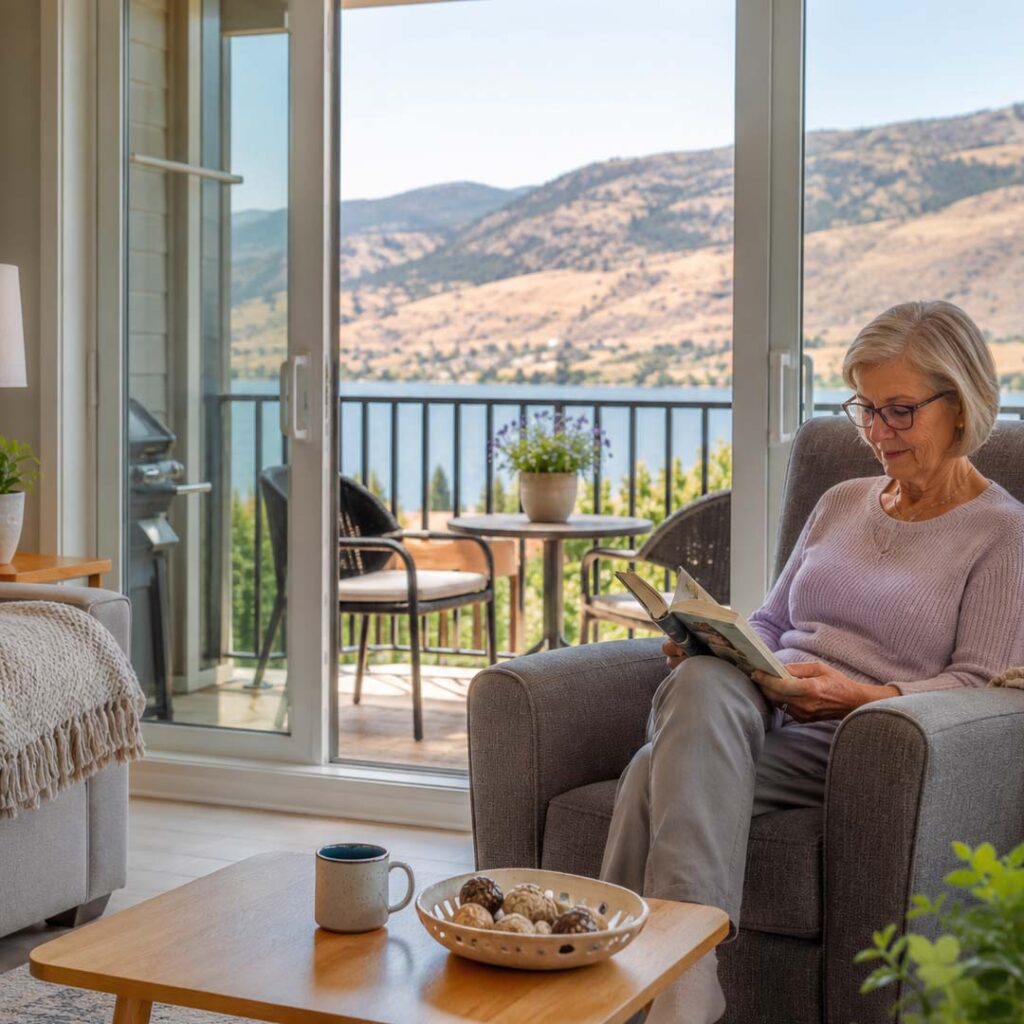
Penticton may offer a slower pace than Vancouver or the Lower Mainland, but it should not automatically be considered an inexpensive retirement destination.
Housing costs depend on location, property type, condition, views, lot size and proximity to the lakes. In addition to the purchase price, prospective buyers should account for:
- Property taxes
- Home or strata insurance
- Strata fees
- Utilities
- Landscaping and exterior maintenance
- Renovations or accessibility improvements
- Transportation expenses
- Travel costs to visit family or attend appointments elsewhere
Wildfire risk and insurance availability should also be discussed before removing conditions from a purchase. Insurance requirements can vary by property and may be affected by location, construction and current wildfire activity.
If you are selling a home elsewhere to fund your retirement, avoid looking only at what you can afford to purchase. Consider how much of your available capital you want tied up in real estate and what ongoing costs will feel comfortable over the long term.
Is Penticton Active Outside the Summer Season?

Penticton is busiest during the summer, but it remains a year-round community.
The city has restaurants, shops, recreation facilities, arts and cultural organizations, community groups and seasonal events. Residents can also reach Summerland, Naramata, Okanagan Falls, Oliver and other South Okanagan communities without travelling great distances.
Winter is noticeably quieter. Some tourism-oriented businesses reduce their hours, and the atmosphere changes after the summer visitors leave. Many residents appreciate this quieter season, while others may miss the range of entertainment and services available in a larger city.
Spending time in Penticton during more than one season can help you understand whether the year-round pace feels right.
For a broader look at the surrounding communities, read our local guide to living in Penticton and the South Okanagan.
Should You Retire in Penticton or Another South Okanagan Community?
Penticton is not the only retirement option in the region.
Summerland may appeal to people looking for a smaller community north of Penticton. Naramata offers village character, wineries and scenic surroundings, although housing choices and services are more limited. Okanagan Falls provides access to Skaha Lake and a quieter setting. Oliver and Osoyoos offer warmer southern locations with their own recreational opportunities and community atmospheres.
The trade-off is often between convenience and setting. Penticton generally provides the region’s broadest combination of healthcare, shopping, recreation and housing choices. Smaller communities may offer greater privacy, a different pace or a particular type of property.
Our upcoming guide to buying a home in Penticton, Summerland, Oliver or Osoyoos will look more closely at how these communities compare.
Visit Like a Future Resident, Not a Tourist
A summer vacation can introduce you to Penticton, but it may not show you what everyday life will be like.
Before buying, spend time in the neighbourhoods you are considering. Drive the routes you would use for groceries and appointments. Visit during the morning and evening. Consider traffic, noise, hills, sun exposure and the condition of nearby properties.
If possible, return during a different season. A location that feels lively and exciting in July may feel very different in January, and that difference may be exactly what you want or something you had not anticipated.
Most importantly, think about the life you intend to live rather than purchasing the type of home you have always owned. Retirement may be an opportunity to choose a property that gives you more time, flexibility and financial comfort.
Is Penticton the Right Place for Your Retirement?
Penticton offers many qualities retirees look for: a beautiful natural setting, a comparatively mild climate, outdoor recreation, established services, diverse housing and a welcoming year-round community.
It also comes with considerations. Housing is not inexpensive, healthcare access requires individual research, some neighbourhoods are car-dependent and the climate can include extreme summer heat, wildfire smoke and winter conditions.
A successful retirement move begins with an honest assessment of your priorities. Once you know what matters most, local knowledge can help you identify the communities and properties that support those priorities.
The Morrison Real Estate Group has deep roots in Penticton and the South Okanagan. If you are considering retiring in the area, our team can help you compare neighbourhoods, understand local property types and find a home that suits both the lifestyle you want today and the years ahead. Please get in touch with us if you’re buying or selling in the area.
Frequently Asked Questions About Retiring in Penticton

Is Penticton a good retirement community?
Penticton can be an excellent retirement community for people who value outdoor recreation, a smaller-city atmosphere, relatively mild winters and access to everyday services. Its suitability depends on your housing budget, healthcare needs, transportation preferences and desired lifestyle.
Is Penticton affordable for retirees?
Affordability depends on the property type and the equity or income available to the buyer. Penticton is generally less expensive than some Lower Mainland communities, but it is not necessarily a low-cost housing market. Buyers should consider ongoing expenses as well as the purchase price.
Does Penticton have a hospital?
Yes. Penticton Regional Hospital provides 24-hour emergency and trauma care, acute care, outpatient clinics, diagnostics and core medical and surgical services. Some specialized healthcare may require travel to a larger centre.
Can you live in Penticton without a car?
It is possible in some neighbourhoods, particularly when living close to downtown, shopping, healthcare or transit. However, many residents rely on a vehicle, and some hillside or outlying neighbourhoods are considerably less practical without one.
What type of home is best for retirement in Penticton?
The best property depends on your priorities. Condos and townhomes may reduce exterior maintenance, while detached homes offer more privacy and space. Layout, stairs, location, strata fees and long-term accessibility should all be considered.
Should I visit Penticton before buying a retirement home?
Yes. Ideally, visit during more than one season and spend time in the specific neighbourhoods you are considering. Experiencing Penticton as a prospective resident provides more useful information than experiencing it only as a summer visitor.
What other South Okanagan communities should retirees consider?
Summerland, Naramata, Okanagan Falls, Oliver and Osoyoos may also be worth considering. Each offers a different combination of housing, services, recreation, climate and proximity to Penticton.